

By Abiola Gbolahan
Edited By Fredrick Oladipupo
Table of Contents
1. Introduction
Webinars aren’t just for boring team meetings anymore, they’ve become powerful marketing tools that help you connect with your audience, build trust, and grow your brand. If you’re serious about running high-converting webinars, you’ve probably come across Demio or Livestorm as top picks.
Both platforms are designed for marketers who care about engagement, lead capture, and smart automated follow-ups. But which one actually delivers the best results?
In this guide, I’m breaking down how they compare in terms of features, ease of use, integrations, pricing, and overall performance. If you’re on the hunt for the best marketing webinar tools, this one’s for you.
2. Platform Overview
When you’re picking the right marketing webinar tools, it’s super important to understand what each platform is actually built for. Demio vs Livestorm may seem similar at first glance, but their core designs and goals are pretty different.
2.1 Demio
Demio is made specifically for marketers and it shows. The interface is clean and super easy to use, even if you’re not super tech-savvy. It focuses heavily on audience engagement, with features like polls, Q&A, handouts, and chat that actually feel natural during a session.
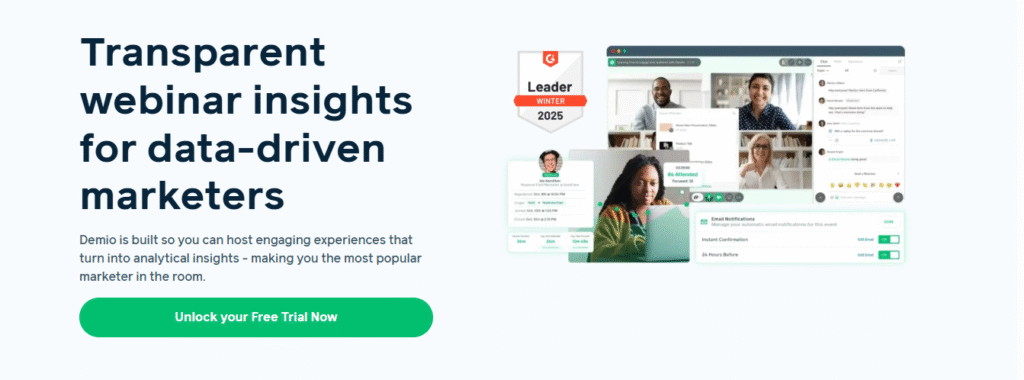
What really makes Demio stand out is how it blends live and automated webinars in one place. That means you can pre-record a webinar and schedule it to play like it’s live which is perfect for saving time while still collecting leads. If you’re looking for something to run smooth, professional campaigns without a huge learning curve, Demio is a strong pick.
And because it was created with marketing in mind, you’ll find built-in tools for email reminders, branded registration pages, and post-webinar follow-ups. That’s why it gets so much attention in any demio review for lead generation.
2.2 Livestorm
Livestorm, on the other hand, is more of an all-in-one video communication platform. It’s awesome if you’re planning to host interactive sessions, like panel talks, demos, or Q&As with multiple speakers. And it’s not just about going live, Livestorm also gives you deep analytics, built-in email tracking, and powerful integrations with tools like HubSpot and Salesforce.
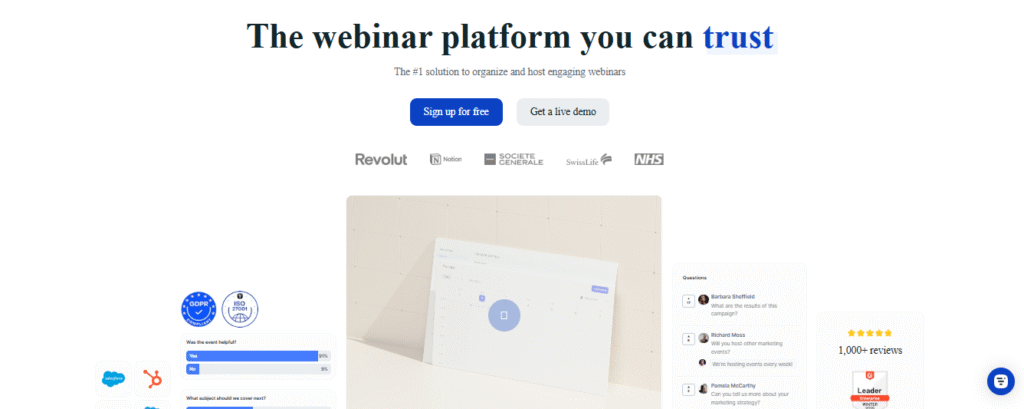
One of the biggest perks is how much control you have over the user experience, everything from registration forms to email sequences is customizable. If you’re big on data, livestorm really shine. You’ll get detailed insights into who joined, how long they stayed, and whether they engage, all stuffs that’s gold for marketers.
In short, Livestorm is ideal if you need something that’s great for lead gen and analytics-driven campaigns, especially if you’re managing a bigger team or working in a more enterprise-style setup.
3. Features Comparison
When comparing Demio vs Livestorm, both platforms cover the basics, live webinars, automation, and audience engagement. But the real difference lies in how deep each tool goes in customization, analytics, and CRM integration all of which matter if you’re choosing between the best webinar platforms for marketers.
Here’s a complete side-by-side breakdown:
| Feature | Demio | Livestorm |
|---|---|---|
| Live Webinars | Yes | Yes |
| Automated Webinars | Yes (Standard+ plan) | Yes |
| On-demand/Webinar Replays | Yes | Yes |
| Engagement Tools (Polls, CTAs) | Interactive | Interactive |
| Screen Sharing | Yes | Yes |
| Email Reminders & Customization | Built-in | Advanced custom flows |
| Landing Page Customization | Basic customization | Advanced customization |
| CRM Integration | Zapier, Mailchimp, HubSpot | Native support for HubSpot, Salesforce, Pipedrive |
| Analytics & Reporting | Basic attendee insights | In-depth analytics with filters and export options |
| User Limit on Starter Plan | Up to 50 attendees | Up to 30 attendees |
| Mobile Experience | Browser-based, mobile-optimized | Fully responsive and mobile-friendly |
| Webinar Series Support | Yes | Yes |
| Breakout Rooms | ❌ Not available | Available (ideal for workshops/training sessions) |
4. Marketing & Automation Capabilities
When it comes to marketing-focused webinar software, both Demio and Livestorm offer solid automation features, but they do it differently. Demio keeps things straightforward with built-in tools for email reminders, post-webinar follow-ups, and CRM tagging. It’s designed to help marketers drive conversions with features like CTAs during live events and customizable registration forms. This simplicity makes it great for teams that want effective automation without getting overwhelmed.
On the other side, Livestorm offers more advanced automation workflows with triggers and actions that support both live and hybrid events. Its behavioral email sequences and deep integration with CRMs like HubSpot and Salesforce give marketers more power to personalize and optimize their campaigns. If you’re looking for robust automated webinar tools and more control over the customer journey, Livestorm might be the better fit. That’s why it stands out in the race for the best webinar platforms for marketers.
5. Analytics & Lead Tracking
Tracking performance and understanding audience behavior is essential when choosing between marketing webinar tools. Demio offers a real-time analytics dashboard that helps you monitor attendance, engagement, and viewer behavior as your webinar unfolds. You can also export attendee data, which is helpful for follow-ups and integrating with your CRM. It’s simple, clear, and designed for marketers who want quick insights without needing to dive too deep.
Livestorm, on the other hand, takes analytics to another level. It provides advanced reporting features like attendance breakdowns, source tracking to see where your leads are coming from, and even conversion funnel tracking. These tools give you a fuller picture of your marketing performance, helping you make data-driven decisions. For marketers running campaigns at scale or across multiple channels, Livestorm’s analytics make it one of the most powerful marketing webinar tools available today.
6. Integrations & Ecosystem
| Integration Type | Demio | Livestorm |
|---|---|---|
| CRMs | HubSpot, ActiveCampaign, Salesforce, Pipedrive | Salesforce, Pipedrive, HubSpot |
| Marketing Automation | Mailchimp, Drip, ConvertKit, AWeber, ActiveCampaign, Marketo | Marketo, Intercom, Mailchimp, ActiveCampaign |
| Zapier | ✅ Yes | ✅ Yes |
| Slack / Notion / Teams | ❌ Limited (Slack basic only) | ✅ Yes (Slack, Microsoft Teams, Notion via Zapier) |
| Calendars | Google Calendar, Outlook (via Zapier) | Google Calendar, Outlook, iCal |
| File Storage | ❌ Not available | Google Drive, Dropbox |
| Analytics & Tracking | Google Analytics (via Zapier), Facebook Pixel | Google Analytics, Facebook Pixel, LinkedIn Insight Tag |
| E-commerce / Ads | Facebook Ads, TikTok Ads (via Zapier), Stripe | WooCommerce, Shopify, Google Ads, LinkedIn Ads |
| Collaboration Tools | ❌ Not available | Slido, Mural, Beekast, Krisp, Interprefy |
| Lead Generation Tools | TikTok Lead Ads, Facebook Lead Ads, ConvertBox | Typeform, Calendly, Zapier lead sources |
| Others | Zoho Flow, Webhooks | Eventbrite, Intercom, Segment, Microsoft Dynamics CRM |
💡 Note: Both platforms support Zapier, so they can technically integrate with thousands of third-party tools. However, Livestorm provides more native integrations out of the box, especially for enterprise use cases. This makes it more appealing to marketers looking for marketing webinar tools with deep analytics, collaboration, and CRM capabilities. Demio, while slightly more limited, still delivers strong essential integrations that work well for leaner marketing teams.
7. User Experience & Interface
When it comes to user experience, Demio keeps things super clean and focused. The interface is simple, intuitive, and clearly designed with marketers in mind. You won’t find unnecessary clutter or distractions, just the essential tools you need to launch and run marketing-focused webinars quickly. Setting up events takes just a few clicks, making Demio ideal for users who want to get in and start generating leads without a big learning curve.
On the other hand, Livestorm offers a more feature-rich experience. Its interface is modern and polished, but with more customization options comes a slightly steeper learning curve. It’s built to handle everything from live webinars to complex automated sequences, so it can take a little longer to master. That said, once you’re comfortable, Livestorm gives you more flexibility which is perfect for teams that want to go deeper with branding, integrations, and marketing webinar tools.
8. Mobile/Web Experience
Both Demio and Livestorm offer fully browser-based platforms, which means attendees don’t need to download anything to join, they just click and go. Their interfaces are mobile-friendly, making it easy for users to host or attend webinars from smartphones or tablets.
However, Livestorm takes the edge when it comes to mobile optimization, with smoother responsiveness and better performance on smaller screens. This makes it a great pick for marketers who expect a mobile-heavy audience and want a seamless experience across all devices, especially when using advanced marketing webinar tools on the go.
9. Pricing & Plans
| Plan Tier | Demio | Livestorm |
|---|---|---|
| Free Plan | ❌ No free plan (free trial available) | ✅ Yes – 20 min/session, 10 attendees max |
| Starter Plan | $45/month (billed annually for 50 attendee) – Live webinars, core features | ❌ Not available |
| Growth/Pro Plan | $80/month (billed annually for 150 attendees | $79/month per host (billed annually) – Full features, automation |
| Premium/Business Plan | $196/month (billed annually for 150 attendees) – Automated webinars, branding | Business & Enterprise plans – Custom pricing, advanced tools |
| Custom Plan | ✅ Yes – Premium (for large teams, white-label, support) | ✅ Yes – Enterprise (dedicated support, SSO, integrations) |
10. Best Use Cases
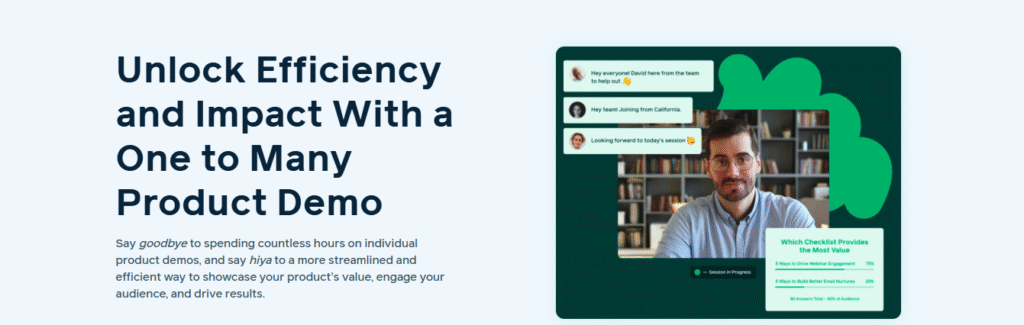
Both Demio and Livestorm are powerful marketing webinar tools, but they shine in slightly different scenarios. Demio is best suited for marketers who prioritize ease of use, clean branding, and straightforward automation. It’s a solid pick for product demos, customer onboarding, and conversion-driven campaigns. If your team wants to launch polished, engaging webinars without the steep learning curve, Demio delivers especially for those focused on simplicity and lead capture. see more
On the flip side, Livestorm is ideal for businesses that need more advanced features like detailed analytics, complex workflows, and scalable webinar funnels. It’s perfect for marketing teams running multi-step lead generation campaigns, hybrid events, and those who rely on deep CRM and marketing tool integrations. If you’re looking to build data-rich, conversion-optimized experiences across multiple touchpoints, Livestorm stands out as one of the best webinar platforms for marketers. see more
11. User Reviews & Community Sentiment
Real user feedback highlights each platform’s strengths and limitations in marketing webinar tools:
Demio receives praise for its ease of setup and clean design. Josh P., an advisor, notes:
“It’s quite simple to figure out how to set up… the user interface and the webinar experience is clean and simple” click here to see full reviews.
Recent G2 reviews echo this:
“platform is simple and intuitive … perfect for our marketing managers to spin up sessions on the go” click here.
However, some users point out that more granular automation and advanced features are missing.
While livestorm is consistently praised for its powerful automation, analytics, and ease of use. A G2 reviewer explains how it’s “great … to gather everything you need to organize, manage, and analyze … live events” .
Another noted the “advanced analytics for tracking engagement and attendance and scheduling workflows“ Read more.
On the flip side, pricing is a common concern: Capterra reviewers say its “pricing model can be expensive, particularly for small businesses and non‑profits” and some TrustRadius reviewers describe it as “not justified by the features offered”.
TL;DR: Demio shines for its simplicity and quick setup, though it may lack deeper automation. Livestorm impresses with robust workflows and analytics, but smaller teams might find the cost a hurdle.
12. Final Verdict
Here’s a quick summary comparing Demio vs Livestorm across key criteria. Whether you’re a solo marketer or part of an enterprise marketing team, choosing the right platform depends on your goals and scale.
| Criteria | Winner |
|---|---|
| Simplicity & UI | ✅ Demio |
| Automation Power | ✅ Livestorm |
| Webinar Customization | ✅ Livestorm |
| Best for Small Teams | ✅ Demio |
| Best for Enterprise Use | ✅ Livestorm |
Demio wins when you need a clean, intuitive platform focused on conversions, making it ideal for solo creators and marketing teams who want quick, effective webinar launches without tech headaches.
On the other hand, Livestorm dominates in scalability, automation depth, and data-driven strategies which is perfect for teams running complex campaigns and enterprise workflows.
If you’re exploring similar comparisons, check out these related guides to help choose the right tools for your business in 2025:
- ClickUp vs Monday.com: Which Project Management Tool Offers Better Value?
- Notion vs Evernote: Which Productivity Tool is Best for You?
- Squarespace vs Shopify: Which Platform is Best for Your Business in 2025?
- Wix vs WordPress: Which Website Builder Is Right for You in 2024?
- Hootsuite vs Buffer: Which Social Media Management Tool is Best for 2025?



Pingback: Scribe vs Tango Comparison: Which is Best AI SOP Generator ?
Pingback: Gamma vs Tome: Which AI Presentation Tool Offers Better Value? - Platform Adviser